






- Industrial LCD display
-
Industrial Products
- DC Servo Drive
- AC Servo Drive
- other
- Heidelberg
- FANUC
- IFM
- Meter
- CCD
- Membrane Keypad
- Film
- YOKOGAWA Module
- Card
- ABB
- MITSUBISHI
- FANUC
- KEYENCE
- BECKHOFF
- Honeywell
- HOLLYSYS
- FUJI servo drives
- HP
- solenoid valve
- thermostat
- Siemens adapter
- color oscilloscope
- Fujitsu connector
- CHELIC
- SMC
- CISCO Module
- INTEL
- Key board
- FAIRCHILD
- Motherboard
- Board
- Bearing
- other
- Control Panel
- Contactor
- Circuit
- OMRON
- Relay
- Controller
- Photoelectric Switch
- Photoelectric Sensor
- Original
- Fan
- Motor Driver
- Limit Switch
- Amplifier
- power supply
- LENZE
- Cable
- Encoder
- Sensor
- Transformer
- Fiber Optic Sensor
- Protection Relay
- Temperature Controller
- Proximity Switch
- Switch Sensor
- Siemens
- Industrial board
- HMI Touch Glass
-
HMI Full Machine Whole unit
- OMRON HMI Touch Panel
- Siemens HMI Touch Panel
- Mitsubishi HMI Touch Panel
- Allen-Bradley automation HMI Touch Panel
- DELTA HMI Touch Panel
- EVIEW DELTA HMI Touch Panel
- KINCO DELTA HMI Touch Panel
- HITECH HMI Touch Panel
- WEINTECK HMI Touch Panel
- TECVIEW HMI Touch Panel
- WEINVIEW HMI Touch Panel
- PRO-FACE HMI Touch Panel
- SIMATIC HMI Touch Panel
- AMPIRE HMI Touch Panel
- HEIDELBERG HMI Touch Panel
- PANASONIC HMI Touch Panel
- PATLITE HMI Touch Panel
- KYOCERA HMI Touch Panel
- KEYENCE HMI Touch Panel
- WEINVIEW HMI Touch Panel
- HITECH HMI Touch Panel
- FUJI HMI Touch Panel
- HAKKO HMI Touch Panel
- SCHNEIDER HMI Touch Panel
- SAMKOON touch panel
- other
- Module
- lcd inverter
- Membrane Keypad Switch
- Winni Touch Screens
- Frequency Inverter
- Servo Motor
- PLC


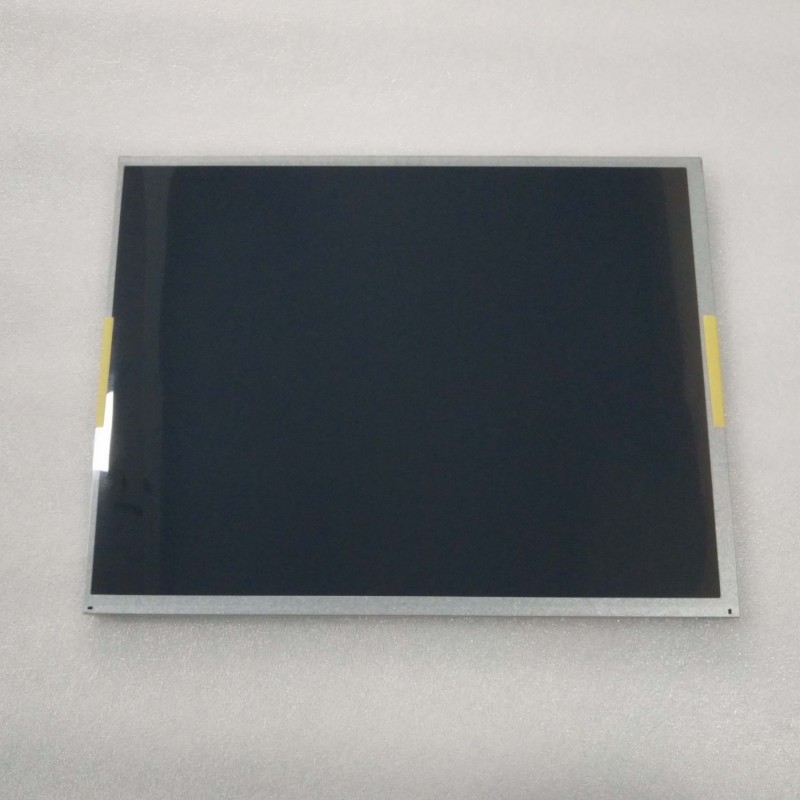
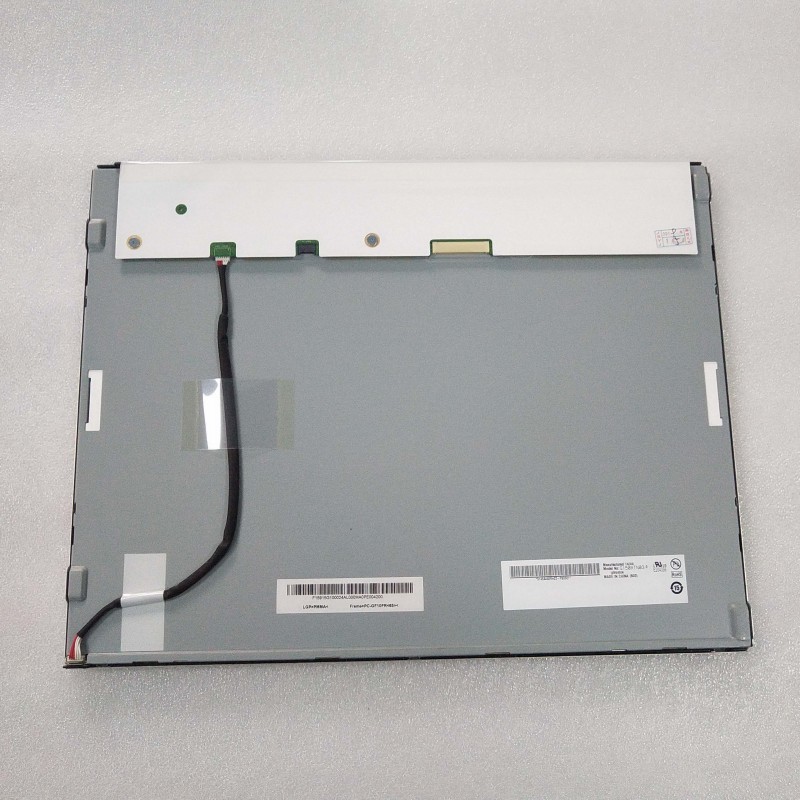
G150XTN03.0 LCD Panel for AUO 15inch 1024*768
In the intricate ecosystem of display technology, where high-resolution panels dominate the headlines, there exists a class of components that form the reliable backbone of countless specialized applications. The G150XTN03.0 LCD Panel, a 15-inch module manufactured by AUO (AU Optronics), stands as a prime example. This panel, with its specific 1024 x 768 (XGA) resolution, represents a deliberate and engineered choice rather than an outdated standard. This article delves into the technical essence and enduring relevance of this particular display component.
Our exploration will move beyond basic specifications to uncover the rationale behind its design, its performance characteristics in key areas like brightness and viewing angles, and the specific industrial and commercial niches where it excels. We will analyze its interface technology and finally, provide crucial guidance for system integrators and procurement specialists. This deep dive aims to provide a comprehensive understanding of where and why the G150XTN03.0 continues to be a critical and viable solution in a rapidly evolving market.
Decoding the Specification: The Rationale Behind XGA at 15 Inches
The G150XTN03.0’s 1024 x 768 resolution on a 15-inch diagonal might seem anachronistic in an era of 4K displays. However, this specification is a calculated engineering decision with distinct advantages. The XGA format provides a 4:3 aspect ratio, which remains supremely functional for a vast array of industrial, medical, and point-of-sale interfaces that are designed for vertical data presentation or legacy software systems not optimized for widescreens.
Furthermore, the relatively low pixel count translates to significantly lower demands on the system's graphical processing unit (GPU) and interface bandwidth. This makes it an ideal choice for embedded systems, industrial PCs, and control units where computational resources are allocated to core processes rather than driving excessive pixels. The larger pixel pitch, compared to high-PPI screens, also enhances readability from a distance and reduces eye strain during prolonged monitoring tasks, a key factor in control room environments.
Core Performance Characteristics: Brightness, Contrast, and Viewing Angles
Performance for an industrial panel is measured not in vibrant colors for media consumption, but in reliability, clarity, and stability. The G150XTN03.0, typically featuring a brightness rating of 250 to 300 nits, is engineered for environments with controlled or ambient lighting, not direct sunlight. This adequate brightness level ensures clear visibility while optimizing power consumption and minimizing heat generation—critical for enclosed systems.
The contrast ratio, often in the region of 500:1, delivers solid differentiation between blacks and whites, essential for text-based data and graphical user interfaces. As a Twisted Nematic (TN) panel, its primary trade-off is in viewing angles. While offering excellent response times, color and contrast shift when viewed from extreme vertical angles. This characteristic defines its application scope: it is perfect for direct-facing installations such as kiosks, diagnostic equipment, or control panels where the viewer is positioned centrally, but less suited for collaborative viewing settings.
Targeted Applications: Where the G150XTN03.0 Excels
The true value of this panel is realized in its targeted applications. It is a workhorse in fields where functionality, durability, and compatibility trump ultra-high resolution. Key sectors include:
Industrial Automation: Machine control interfaces, HMI (Human-Machine Interface) panels, and factory floor monitoring displays.
Medical Equipment: Diagnostic devices, patient monitoring systems, and laboratory instrument readouts where legacy software compatibility is paramount.
Point-of-Sale (POS) & Kiosks: Retail terminals, self-service kiosks, and information booths requiring reliable, long-duration operation.
Transportation & Logistics: Fleet management systems, dispatch terminals, and warehouse control screens.
In these environments, the panel’s robustness, standard form factor, and predictable performance make it a preferred component for system integrators.
The TN Technology Advantage: Speed and Cost-Effectiveness
The choice of Twisted Nematic (TN) technology for the G150XTN03.0 is strategic. TN panels are renowned for their fast response times (often in the millisecond range), which virtually eliminates motion blur—a feature that, while less critical for video, ensures sharp rendering of fast-updating data in real-time control systems. This technological path also offers significant cost benefits, both in initial procurement and in the broader supply chain.
For manufacturers building cost-sensitive yet reliable commercial and industrial equipment, the TN-based G150XTN03.0 provides an optimal balance. It avoids the higher cost and potential over-engineering of IPS (In-Plane Switching) panels, directing budget towards other critical system components while still delivering a dependable visual interface.
Interface and Compatibility: Ensuring Seamless Integration
Integration is a cornerstone of industrial component design. The G150XTN03.0 typically utilizes an LVDS (Low-Voltage Differential Signaling) interface. LVDS has been the long-standing standard for internal panel connections, prized for its robustness, noise resistance, and ability to transmit high-speed data over relatively long distances within a device. This makes integration straightforward with a wide range of standard controller boards and single-board computers.
Understanding the exact pin configuration, voltage requirements (often 3.3V), and backlight type (usually CCFL or LED, with LED being more modern and energy-efficient) is vital for a successful replacement or new design. Compatibility extends beyond the physical connector to the timing controller (TCON) specifications, which must align with the driving hardware to ensure a stable image.
Sourcing and Replacement Considerations for System Integrators
For professionals tasked with maintaining or designing systems with this panel, strategic sourcing is key. The G150XTN03.0 is a specific model number, and attention must be paid to potential revisions (like V0, V1, etc.) that may have subtle differences in mounting holes, connector placement, or backlight voltage. Procuring from reputable suppliers who can provide datasheets and compatibility guarantees is crucial.
When considering a replacement, one must evaluate not just the physical size and resolution, but also the interface type, voltage, and mechanical mounting. While "compatible" panels may exist, direct model-for-model replacement minimizes engineering rework and validation time. For legacy systems, the continued availability of such panels is essential for long-term operational support and lifecycle management.
FAQs: G150XTN03.0 LCD Panel
Q10: Why choose this over a higher-resolution modern panel?A10: For legacy system compatibility, lower GPU demands, cost savings, and suitability for text/data-centric applications where high resolution is unnecessary.
Conclusion
The AUO G150XTN03.0 LCD panel is a testament to the principle that in engineering, the optimal solution is context-dependent. It is not a panel designed for the consumer market's thirst for pixels but a specialized tool built for reliability, integration ease, and functional performance in demanding environments. Its continued relevance in industrial, medical, and commercial sectors underscores the enduring need for purpose-built components that prioritize stability and compatibility over sheer spec-sheet appeal.
For system designers, procurement specialists, and maintenance engineers, understanding the nuanced value proposition of components like the G150XTN03.0 is crucial. It represents a strategic choice that balances performance, cost, and longevity, ensuring that the machines and systems we depend on for critical operations have a clear, reliable, and durable window to their digital controls. In a world of rapid technological change, such dependable foundations remain indispensable.


